Every business has been there. The brochures arrive, the box is opened with a flourish, and something is not quite right. The colours look off, the logo is fuzzy, or the contact number on 5,000 flyers is missing a digit. What should have been a confident marketing investment has just become a costly reprint.
The good news is that almost every expensive print mistake is preventable. With over 40 years of experience as commercial printers in Crawley and across the South East, we have seen the same handful of errors crop up time and time again, and we know exactly how to help you sidestep them.
Here are the five most common print mistakes that cost businesses money, along with simple, practical ways to avoid them on your next project.
1. Supplying Low-Resolution Artwork
This is by far the most common (and most heartbreaking) mistake we see. A logo pulled from a website, a photograph downloaded from an email, or an image scaled up beyond its original size will almost always print as a blurry, pixelated mess. Once the job is on the press, it is too late.
Why it costs you money: reprints, project delays, and a finished product that undermines the professional image you are paying to project.
How to Avoid It
Always supply images at a minimum of 300dpi at the size they will be printed. For logos, request a vector file (such as an .ai, .eps, or .svg) from your designer, because vectors can be scaled to any size without losing quality. If you are unsure whether your artwork is print-ready, send it over and we will check it for you before any presses start running.
For more on getting your files right from the start, our guide on how to brief a print design project walks you through everything a printer needs.
2. Designing in RGB Instead of CMYK
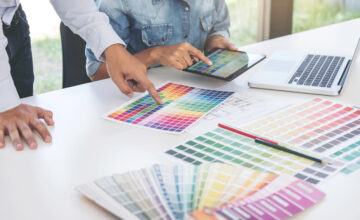
Screens display colour using RGB (red, green, blue), while professional printers use CMYK (cyan, magenta, yellow, black). When RGB artwork is sent to print, the colours often shift, sometimes dramatically. That bright, punchy blue on your monitor can come back looking dull and purple on a printed brochure.
Why it costs you money: brand colours that do not match your guidelines, customer disappointment, and rejected print runs that need to be redone.
How to Avoid It
Set up your design files in CMYK colour mode from the very beginning. If you use Pantone (PMS) colours for your brand, specify these clearly so we can match them precisely on press. When in doubt, ask for a printed proof before committing to a full run. A small upfront investment in a proof can save thousands on a faulty batch. Our graphic design team can help prepare files correctly if your artwork was originally built for digital use.
3. Forgetting to Add Bleed and Safe Margins
Bleed is the small extra area of design (usually 3mm on each edge in the UK) that extends beyond the final trim line. Without it, you risk thin white slivers appearing on the edge of your printed piece. The opposite problem is placing important text or logos too close to the trim line, where they can be sliced off when the print is cut to size.
Why it costs you money: entire print runs that look unprofessional or have key information cut off, requiring a full reprint.
How to Avoid It
Always design with a 3mm bleed and keep all important elements (text, logos, contact details) at least 5mm inside the trim line. Most professional design software has built-in bleed settings, so use them. If you are working with a designer, confirm bleed has been included before signing off the artwork. Our team can review your files and flag any issues before going to press, whether the job is heading to our litho and digital printers or large format machines.
4. Skipping the Proofreading Stage
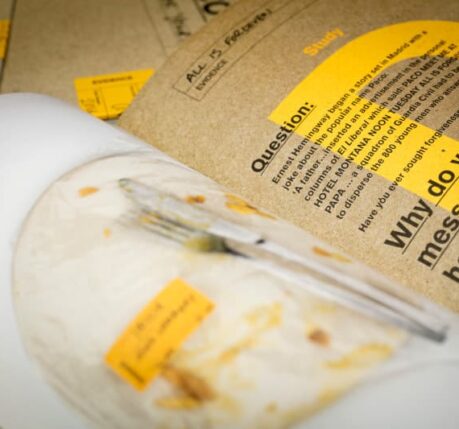
A misspelled product name, a wrong phone number, or a typo in a headline can render an entire print run unusable. We have seen businesses send 10,000 leaflets to print with the wrong website address. The cost is not just the reprint, it is the lost leads, the wasted distribution, and the awkward conversation with the boss.
Why it costs you money: wasted print runs, lost enquiries from incorrect contact details, and damage to brand credibility.
How to Avoid It
Always have at least two people proofread the final copy before submitting it for print. Read the document backwards to spot typos your brain would normally skip over. Double-check every phone number, email address, web URL, and price by clicking or dialling them directly. Treat the digital proof we send you as the last line of defence and review it slowly, ideally on a printed copy rather than a screen. Once it is signed off, the press is set and changes become costly.
5. Choosing the Wrong Paper Stock
Paper stock is one of the most underrated decisions in printing. The wrong choice can make a luxury brochure feel cheap, a flyer feel flimsy, or a poster fail to hold up on a shop wall. Equally, paying for a heavy uncoated stock when a lighter one would have done the job is money straight out of your budget.
Why it costs you money: print that does not perform its intended job, repeat orders to upgrade quality, or overspending on materials your project did not need.
How to Avoid It
Match the paper to the purpose. Business cards typically work best on 350gsm or above for a quality feel. Flyers tend to suit 130gsm to 170gsm. Brochures often benefit from a heavier cover stock combined with lighter inner pages. Consider how the piece will be used: is it being handled repeatedly, sent through the post, or displayed for weeks at an exhibition?
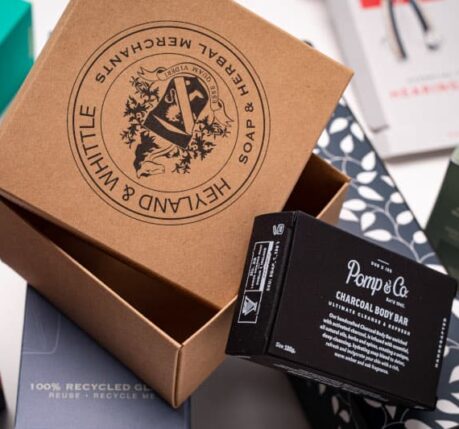
If sustainability matters to your brand (and increasingly, to your customers), our eco printing service offers FSC certified and recycled stocks that look premium without the environmental cost. As a vegan-friendly and FSC certified printer, we can recommend a paper that fits both your brief and your values.
Print Smarter, Not More Expensively
The thread running through every one of these mistakes is the same: a small amount of preparation prevents a large amount of waste. Investing time in proper artwork setup, careful proofreading, and the right material choices does not just save money on reprints. It protects your brand, your timelines, and the impact of every campaign you put into market.
At Treetop Design & Print, we work with our clients to catch issues before they become expensive problems. From file checks and design support to paper recommendations and printed proofs, our friendly team is on hand to make sure your next print project goes right the first time.
speak to a friendly team member today
If you would like a quote, call our team today, email us or fill in the Quick Quote form below, and we will be in touch with you shortly. We look forward to hearing from you.
Read Our Latest Reviews


Contact Us
"*" indicates required fields